
Ataxia makes ordinary moments unpredictable: a cup that tips, a foot that lands in the wrong place, words that come out slower than you meant them to. For a child it can mean falling more often than friends do; for an adult it can mean losing the confidence to walk out the front door. At Revivo, we use Intensive Suit Therapy to steady the body while it practises balance and coordination, with Hyperbaric Oxygen Therapy available as an optional complement.
What ataxia is
Ataxia means a loss of coordination. The muscles may be strong enough, but they do not fire together smoothly or at the right moment, so movements overshoot, fall short or wobble. Ataxia is a sign of an underlying problem rather than a single disease. It most often involves the cerebellum, the part of the brain at the back of the head that fine-tunes balance, movement and the rhythm of speech, or the pathways that carry information to and from it. Clinicians usually describe three broad kinds:
Cerebellar ataxia
Caused by changes in the cerebellum or its connections. Movements become poorly timed, and speech and eye movements are often affected.
Sensory ataxia
The brain does not receive accurate information about joint position, often because of nerve or spinal cord problems. Balance is usually worse in the dark or with eyes closed.
Vestibular ataxia
Linked to the inner-ear balance system. It can bring dizziness and unsteadiness, especially when turning the head.
What causes ataxia
Ataxia can come on suddenly, develop over months or years, or be present from early childhood and stay fairly stable. Common causes include:
- Stroke, head injury, tumours or brain infections. See our post-stroke and brain injury pages.
- Ataxic cerebral palsy, present from early childhood. See cerebral palsy.
- Multiple sclerosis and other conditions affecting the brain or spinal cord.
- Inherited ataxias such as Friedreich's ataxia and the spinocerebellar ataxias, which are usually progressive.
- Toxic and nutritional causes, including heavy alcohol use, some medications and low vitamin B12 or E.
- After a viral illness: in young children, a short-lived ataxia sometimes follows infections such as chickenpox and usually settles on its own.
The cause shapes what is realistic. After a stroke or injury, therapy often aims to rebuild skills. With a progressive ataxia, the focus shifts toward keeping strength, staying safe and protecting independence for as long as possible. Your neurologist leads the diagnosis; our job is movement.
Common signs of ataxia
- An unsteady, wide-based walk, stumbling or frequent falls
- Swaying when standing still, turning or walking on uneven ground
- Clumsy reaching, or a tremor that worsens as the hand nears its target
- Difficulty with buttons, handwriting or cutlery
- Slurred, slow or uneven speech, and sometimes swallowing difficulty
- Jerky eye movements (nystagmus) or trouble focusing
There is an emotional side too: fear of falling, embarrassment at looking unsteady, frustration when hands won't do as they're told. Confidence is often one of the first things families mention when things begin to change.
If you or someone near you suddenly loses balance or coordination, especially with slurred speech, facial drooping, weakness, severe headache or double vision, call 911. New ataxia can be a sign of stroke and needs urgent medical care, not therapy.
How Revivo approaches ataxia
Coordination is learned through practice, but practising balance is risky when you are unsteady. Many people with ataxia start moving less, lose strength and become less steady still. Intensive Suit Therapy is designed to break that cycle:
- A steadier frame. The suit, a vest, shorts, knee pads, shoe attachments and cap joined by elastic bungee cords, holds the trunk, hips and knees closer to alignment and damps some of the wobble, so muscles can practise doing the right thing.
- Better body awareness. The cords give continuous feedback about joint position, which may be especially useful when the brain's own position sense is unreliable.
- Safe practice at the edge of balance. In the suspension set-up of the Universal Exercise Unit, you or your child can reach, shift weight and step without risk of falling, so balance can be challenged further than on open floor.
- A stable base. Pulley work isolates the trunk, hip and shoulder muscles that coordinated arm and leg movement depends on.
A block typically runs 3–4 hours a day, five days a week, for 3–4 consecutive weeks, delivered by specially trained physiotherapists and tailored after an assessment. For ataxia, the dynamic part of each day leans on balance and rhythm: parallel-bar work, stand-ups, assisted walking and, where appropriate, tricycle riding to coordinate both legs.
"The gains that I noticed immediately were the 'using of two hands automatically', the vocalization, more body awareness and confidence. Thank you Revivo, you give hope to parents like myself."
Giselle Romanino, mother of Jacob, 11 (ASD & ataxia) · Toronto
Where HBOT fits
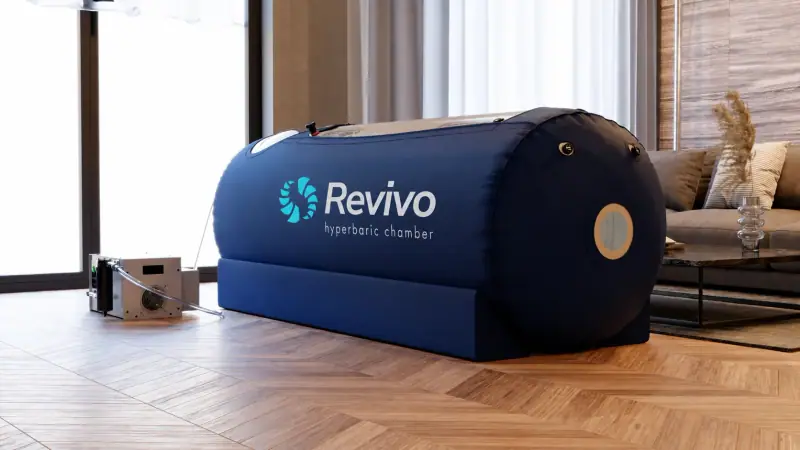
Some people add Hyperbaric Oxygen Therapy, where higher pressure allows more oxygen to dissolve into the plasma and body fluids. Health Canada recognizes 13 conditions for HBOT, including decompression sickness and carbon-monoxide poisoning, and ataxia is not one of them. Evidence for HBOT in ataxia is limited, so we offer it strictly as a complementary therapy and will tell you honestly whether it makes sense. Adults wanting a longer course can rent a chamber for home use with GTA delivery.
Speech-language pathology can help with speech clarity and swallowing, and massage and neurofeedback are available through our supporting therapies.
Goals we commonly work toward
Progress with ataxia is gradual and individual. Rather than promise an outcome, we set specific goals with you at the start, such as:
- Sitting and standing with less sway, so the hands are free for tasks
- Safer sit-to-stand, turning and transfers
- A narrower, more rhythmic step, or walking with less support
- Smoother, better-aimed reaching
- Using both hands together, such as holding a container while opening it
- Strategies to reduce falls and recover safely when balance slips
For conditions such as Friedreich's ataxia, therapy cannot stop the condition. It may help maintain strength, mobility and confidence, and some families choose periodic blocks as needs change. We will talk openly about what is realistic.
Safety and suitability
Every program begins with an intake assessment of about an hour. We review the cause of the ataxia if known, medications, falls history, heart and breathing health, and bone or joint concerns. We may ask your neurologist or family physician for information or clearance, particularly after a recent stroke or where the heart may be involved, as can happen in Friedreich's ataxia. Fatigue tends to increase unsteadiness, so pacing and rest are part of the plan.
If HBOT is added, possible side effects include ear discomfort, usually eased by swallowing or yawning, temporary near-sightedness, and a rare risk of seizure that lower pressures and shorter sessions help reduce. For ataxia, HBOT remains a complementary option, not a Health Canada-recognized treatment.
Frequently asked questions
Can therapy cure ataxia?
It depends on the cause. Some temporary forms settle as the underlying problem is treated. For long-term or progressive ataxia, therapy does not cure the condition; it aims to improve or maintain balance, coordination and independence.
Is suit therapy suitable for adults?
Yes, suit therapy is used with adults as well as children. Suitability depends on your health, fitness and goals, which the intake assessment looks at carefully.
What does it cost?
Phone or in-person consultations are free. The roughly one-hour intake assessment is $100 CAD, and suit therapy is billed at $122 CAD per hour. HBOT starts from $79 per session. A significant portion may be claimable through extended health or private insurance, as therapy is delivered by registered therapists.
How long until we notice a difference?
Some people notice steadier sitting or more confidence within the first week or two; other changes, like walking pattern, take longer. With HBOT, changes such as better sleep are sometimes noticed after about 10 sessions, with fuller results discussed after 40–60. Progress varies.
Will therapy help with speech?
Suit therapy focuses on the body, though better trunk control can support breathing and voice. For speech and swallowing, we recommend adding speech-language pathology.
Should my neurologist be involved?
Yes. Your neurologist or family physician should know about any intensive program, and we may ask them for clearance or records before you start.
Medical note: this page is general information, not medical advice. Every person is different and progress varies. Please involve your family physician or specialist when planning therapy. Hyperbaric oxygen is offered at Revivo as a complementary therapy; neurological conditions are not among the 13 HBOT indications currently recognized by Health Canada.