
A stroke can change everyday life in a single afternoon. Getting dressed, walking to the mailbox or finding the right word can suddenly take real effort, and once formal rehab winds down, many people wonder whether they've reached their limit. Often there is still room to improve. At Revivo, we build intensive, goal-driven programs for adults in Toronto and across the GTA who want to keep moving forward, whether the stroke happened three months ago or several years ago.
What a stroke does to the brain and body
A stroke happens when blood flow to part of the brain is interrupted. In an ischemic stroke, the most common type, a clot blocks an artery. In a hemorrhagic stroke, a blood vessel bursts and bleeds into or around the brain. Either way, brain cells in the affected area are starved of oxygen, and some are lost.
What you notice afterwards depends on where the stroke happened and how much tissue was affected. Each side of the brain controls the opposite side of the body, so a left-sided stroke usually weakens the right arm and leg and often affects language, while a right-sided stroke tends to affect the left side and can change attention and spatial awareness. Strokes in the brainstem or cerebellum may disturb balance, coordination or swallowing.
The encouraging part is that the brain can reorganize. Healthy areas can take over some of the work of damaged ones, a process called neuroplasticity that is driven largely by practice. Recovery is usually quickest in the first three to six months, but many people keep making meaningful gains well beyond that window when they train with enough intensity and repetition.
Common effects after a stroke
No two strokes are alike, but these are the challenges adults most often bring to us:
- Weakness on one side (hemiparesis) or paralysis (hemiplegia) affecting the arm, leg and sometimes the face.
- Muscle tightness and spasticity, such as a clenched hand or a stiff knee, which makes movement effortful. Our page on spasticity explains more.
- Foot drop, where the front of the foot is hard to lift, leading to tripping or a hitched step.
- Poor balance and a habit of leaning onto the stronger side to feel safe.
- Shoulder pain on the affected side, sometimes from the joint drifting out of position.
- Speech, language and swallowing changes, including aphasia (trouble finding or understanding words) and dysarthria (slurred speech).
- Fatigue, low mood and anxiety, which are very common after a stroke and deserve attention in their own right.
How Revivo approaches stroke recovery
Our stroke programs are built around Intensive Suit Therapy, also known as the TheraSuit Method or Adeli method. The suit is a soft dynamic proprioceptive orthosis: a vest, shorts, knee pads, shoe attachments and a cap joined by elastic bungee cords. By adjusting the cords, your therapist draws the body toward better alignment and loads it like an external skeleton while you work. That fits stroke recovery for three practical reasons:
- Symmetry. The cords can encourage you to bear weight through the affected leg instead of shifting everything onto the stronger side.
- Feedback. Steady compression through the joints gives the brain more information about where the body is, which may help you feel more aware of the weaker side.
- Repetition. In the Universal Exercise Unit, the "spider cage", pulleys and weights let your therapist isolate weak muscles, such as hip, ankle and shoulder stabilizers, for many repetitions. Suspension in the "spider" lets you practise standing and stepping with support, without fear of falling.
You can also add Hyperbaric Oxygen Therapy (HBOT). Breathing oxygen at increased pressure allows more oxygen to dissolve into the plasma and other body fluids. To be plain: Health Canada recognizes 13 conditions for HBOT, including decompression sickness, carbon monoxide poisoning and problem wounds such as diabetic foot ulcers. Stroke is not one of them. Revivo offers HBOT as a complementary therapy alongside active rehab, never as a replacement for your medical care. There is a combined Suit + HBOT package, and if daily trips to Scarborough are hard, ask about renting a chamber for home use with GTA delivery.
Physiotherapy, massage, acupuncture and speech-language pathology are available as supporting therapies, for example massage to settle tight muscles, or speech-language pathology if words or swallowing are still a struggle.
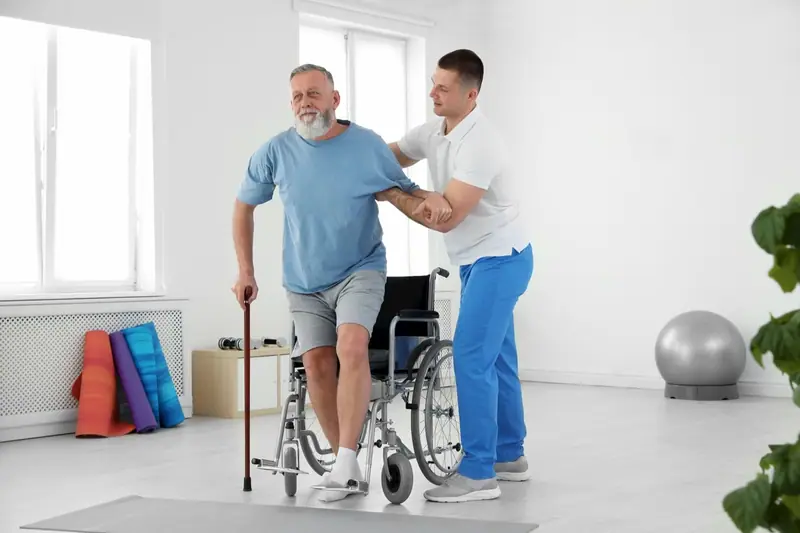
What a program looks like
A standard intensive block runs 3–4 hours a day, 5 days a week, for 3–4 consecutive weeks, delivered by specially trained physiotherapists and customized after your assessment. Fatigue is common after a stroke, so we set the daily load at that assessment and adjust as you respond. A typical day runs like this:
Warm-up (30–45 minutes)
Hot packs and deep-pressure massage loosen tight muscles, followed by gentle preparatory movement.
Suit on (10–15 minutes)
Your therapist fits the suit and sets the cords for that day's alignment goals.
Isolated strengthening (up to 1 hour)
Targeted work in the Universal Exercise Unit on the muscles holding back your walking, reaching or balance.
Dynamic practice (up to 1 hour)
Stand-ups, assisted and suspended walking, parallel-bar work and balance tasks that turn new strength into usable movement.
Cool-down (10–15 minutes)
Suit removal, stretching and a check-in on how you're feeling.
Realistic goals we commonly work toward
Progress after a stroke varies from person to person, depending on the stroke itself, your general health and how much you practise between blocks. Rather than promise outcomes, we set specific goals with you, such as:
Standing up and sitting down
Rising from a chair, bed or toilet with less help and more even weight through both legs.
Walking with more confidence
A steadier, more even step, better foot clearance and, where realistic, less reliance on a walker or cane.
Balance and fewer falls
Turning, reaching and stepping without losing your footing, so ordinary tasks at home feel safer.
Using the affected arm
Shoulder control, reaching and grip practice so the weaker hand can start helping with daily tasks again.
Regular practice between intensive blocks helps protect what you've gained. Before your final session, ask your therapist to show you and a family member or caregiver a short home routine.
Safety and suitability
Intensive therapy is demanding, so we screen carefully first. Expect questions about your stroke, blood pressure, heart health, medications, any seizures since the stroke, and pain or joint problems. We recommend involving your family physician or neurologist, and we may ask for their clearance, particularly if the stroke was recent, your blood pressure isn't yet well controlled, or you have a heart condition.
HBOT has its own screening. The most common side effect is ear discomfort as the pressure changes, usually eased by swallowing or yawning. Temporary near-sightedness can develop over a longer course. There is also a rare risk of seizure, reduced with lower pressures and shorter sessions; if you have had a seizure since your stroke, your doctor needs to weigh in first. And as noted above, stroke is not a Health Canada-recognized HBOT condition, so HBOT is offered only as a complement to rehab.
If you or someone near you suddenly develops a drooping face, arm weakness, or slurred or confused speech, call 9-1-1 right away. Think FAST: Face, Arms, Speech, Time. Don't drive to a clinic, and don't wait to see whether it passes.
Frequently asked questions
Is it too late to start if my stroke was years ago?
Not necessarily. Gains are usually slower than in the first few months, but many people continue to improve with focused, repetitive practice long after a stroke. Your assessment helps set honest goals.
How soon after a stroke can I begin?
Once you're medically stable and your doctors are comfortable with you taking on more activity. Some people start as outpatient rehab ends; others start years later.
What does it cost?
Consultations, by phone or in person, are free. The intake assessment takes about an hour and costs $100 CAD. Suit therapy is billed at $122 CAD per hour of therapy, so your total depends on the hours in your approved protocol. HBOT starts from $79 per session. Because therapy is delivered by registered therapists, a significant portion may be claimable through extended health or private insurance.
How long until I see a change?
It varies. Some people notice small changes during a block, such as steadier standing or easier transfers, while lasting change usually builds over repeated blocks and regular home practice. With HBOT, some people notice changes, often in sleep first, after about 10 sessions; more evident results are typically discussed after 40–60 sessions. No result is guaranteed.
Do I have to manage 3–4 hours a day?
The protocol is designed around 3–4 hours, but your schedule is customized after the assessment and can be adjusted if fatigue becomes a problem. Treatment hours are Monday to Friday, 9:00 am to 6:00 pm.
Medical note: this page is general information, not medical advice. Every person is different and progress varies. Please involve your family physician or specialist when planning therapy. Hyperbaric oxygen is offered at Revivo as a complementary therapy; neurological conditions are not among the 13 HBOT indications currently recognized by Health Canada.