
Spasticity can feel as though your body is working against you: a knee that won't straighten, a hand that stays fisted, a foot that points down just as you try to step. For parents, it may mean watching a child walk on tiptoe or struggle to sit comfortably. For adults after a stroke, brain injury or spinal cord injury, it can mean pain and lost independence. At Revivo, we combine careful preparation of tight muscles with Intensive Suit Therapy to work on flexibility, strength and better movement, alongside the medical care you already have.
What spasticity is
Spasticity is a type of increased muscle tone. When a spastic muscle is stretched, it resists, and the faster the stretch, the stronger the resistance. You may feel it as a "catch" when you move your child's leg quickly, or as stiffness that eases a little with slow, steady movement.
It happens when the pathways that carry movement signals from the brain down through the spinal cord, known as upper motor neurons, are damaged. Normally these pathways keep muscle reflexes in check. When they are disrupted, the balance between signals that excite muscles and signals that calm them is lost, and reflexes become overactive. In other words, spasticity is a nervous-system problem that shows up in the muscles, not simply tight muscles that need more stretching.
Spasticity is not always all bad. Some people rely on extra tone in their legs to help them stand or transfer, which is one reason treatment aims to manage spasticity rather than remove it entirely.
Conditions that cause spasticity
- Cerebral palsy: spastic CP is the most common form. See cerebral palsy.
- Stroke: often on one side, commonly at the elbow, wrist, fingers and ankle. See post-stroke recovery.
- Brain injury from trauma or illness. See brain injury.
- Spinal cord injury. See spinal cord injuries.
- Multiple sclerosis and some other neurological conditions.
Signs and long-term effects
- Stiff muscles and a reduced range of movement
- Exaggerated reflexes, or clonus, a rhythmic beating often felt at the ankle
- Sudden spasms, especially at night or when changing position
- Typical postures: bent elbow and wrist, fisted hand, thumb in palm, pointed foot
- Toe walking, knees turning in, or legs crossing in a "scissor" pattern
- Pain, fatigue, and difficulty with dressing, hygiene or sleep
Muscles that stay short for long periods can lose length permanently, a contracture, and joints may become fixed in bent positions. In growing children, bones can lengthen faster than tight muscles keep up, which is why tone often becomes more noticeable during growth spurts and why hips are monitored in children with CP. In adults, long-standing spasticity can contribute to pain and skin problems. Consistent management aims to prevent these secondary problems.
How Revivo approaches spasticity
Spasticity is usually managed by a team. Your physician or specialist may use medication, botulinum toxin injections, casting, orthotics such as ankle-foot orthoses or, in some cases, surgery. Therapy turns those options into better movement, and that is where Intensive Suit Therapy comes in.
Preparing tight muscles
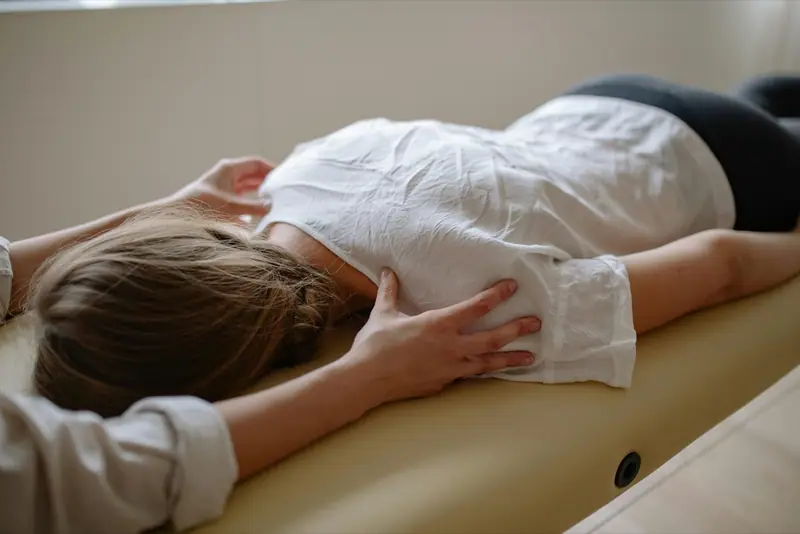
Each day of a block begins with 30 to 45 minutes of hot packs, deep-pressure massage and gentle warm-up exercises, helping stiff muscles relax enough to move through a fuller range before the harder work begins.
Strength where it is missing
Spasticity rarely travels alone: the muscles on the other side of the joint are often weak. A tight calf usually pairs with weak muscles at the front of the shin; tight inner-thigh muscles pair with weak hip muscles on the outside. Older advice warned against strengthening spastic limbs, but current rehabilitation practice generally recognizes that well-chosen strengthening does not make spasticity worse, and that weakness is often the bigger barrier. The pulleys and weights of the Universal Exercise Unit let therapists isolate exactly those weaker muscles.
Alignment under load
The suit, a vest, shorts, knee pads, shoe attachments and cap joined by elastic bungee cords, guides the hips, knees and feet toward better positions during standing, stand-ups and stepping. The body practises bearing weight in alignment instead of reinforcing the patterns spasticity pulls it into. A standard block runs 3–4 hours a day, five days a week, for 3–4 consecutive weeks, customized after an assessment by specially trained physiotherapists.
"The suit, which was worn 80% of the time, provided Thomas with added balance, coordination and more independence! Despite moving constantly which typically results in tighter muscles, Thomas was more limber."
Linda Canning, mother of Thomas, 9 · Toronto
Where HBOT and other therapies fit
HBOT is not a treatment for muscle tone itself. Some families add Hyperbaric Oxygen Therapy as a complement, either in clinic or through home chamber rental. Health Canada recognizes 13 conditions for HBOT, such as carbon-monoxide poisoning and radiation injury, and spasticity, along with the conditions that most often cause it, is not among them. Massage and acupuncture are available through our supporting therapies.
Goals we commonly work toward
More range, less resistance
Moving joints through a fuller range, and making stretching, dressing and positioning easier.
Stronger opposing muscles
Building the muscles that lift the foot, straighten the knee and steady the hips, to balance the pull of tight muscles.
Better standing and walking
Flatter feet, straighter knees and a more upright posture when standing or stepping.
Comfort and daily care
Easier sitting, sleeping and hygiene, and less discomfort from fixed postures.
Some changes, such as easier movement within a session, may show up early; others, like a better walking pattern, take repeated practice. Regular stretching and positioning between blocks help protect gains. Progress varies from person to person.
If you or your child receive botulinum toxin injections, ask your specialist whether timing an intensive block for the weeks afterward makes sense. Many teams try to pair reduced tone with focused strengthening and stretching, and we can plan around your physician's recommendations.
Safety and suitability
Your program starts with an intake assessment, roughly an hour long, that looks at range of movement and existing contractures, hip status, recent injections, casting or surgery, seizures, heart health and bone strength, since suit work loads the bones and joints. We may ask your physician for records or clearance before you start.
Tell your doctor promptly if spasticity suddenly gets worse. Infections, pressure sores, constipation and other problems can trigger an increase in tone, particularly after spinal cord injury, and need medical attention.
HBOT is offered at Revivo as a complementary therapy only; it is not Health Canada-recognized for spasticity. Possible side effects include ear discomfort, usually eased by swallowing or yawning, temporary near-sightedness, and a rare risk of seizure that lower pressures and shorter sessions help reduce.
Frequently asked questions
Will suit therapy get rid of spasticity?
No. Spasticity comes from the nervous system and is usually managed over the long term. Therapy aims to improve range, strength, alignment and everyday function, and to reduce the risk of contractures.
Isn't stretching enough?
Stretching is important, but on its own it does not build the weak muscles that oppose spastic ones or teach the body to move in better alignment. Intensive programs combine all three.
Can we start after botulinum toxin (Botox) injections?
Often, yes, but timing should be agreed with the specialist who gave the injections. Let us know the dates at your assessment.
What does it cost?
Consultations are free. The intake assessment is $100 CAD and suit therapy is $122 CAD per hour of therapy. HBOT starts from $79 per session. Because registered therapists provide care, a significant portion may be claimable through extended health or private insurance.
How soon might we notice a difference?
Some people feel looser after sessions within the first week, though lasting changes take longer. With HBOT, some notice changes such as better sleep after about 10 sessions, with more evident results discussed after 40–60. Responses vary.
Do you work with adults after stroke or spinal cord injury?
Yes. Adults can be assessed for suit therapy and supporting care. See our post-stroke and spinal cord injury pages.
Medical note: this page is general information, not medical advice. Every person is different and progress varies. Please involve your family physician or specialist when planning therapy. Hyperbaric oxygen is offered at Revivo as a complementary therapy; neurological conditions are not among the 13 HBOT indications currently recognized by Health Canada.