
A brain injury rarely affects just one thing. You might be juggling headaches and fatigue, a slower memory, a shorter fuse and a leg that won't do what it used to, and the people around you may not see most of it. At Revivo, we work with adults in Toronto and across the GTA who are living with the effects of an acquired or traumatic brain injury, from a concussion that hasn't settled to a severe injury that changed how the body moves.
Understanding ABI, TBI and concussion
Acquired brain injury (ABI) is the umbrella term for damage to the brain that happens after birth and isn't inherited or degenerative. It falls into two broad groups:
- Traumatic brain injury (TBI) is caused by an outside force: a fall, a motor vehicle collision, a sports hit, an assault or a workplace accident. The brain can be bruised, bleed, or have its nerve fibres stretched as it moves inside the skull.
- Non-traumatic brain injury comes from inside the body, for example a period without enough oxygen after a cardiac arrest or near-drowning, an infection such as encephalitis or meningitis, or a tumour and its treatment. Stroke also belongs here, and we cover it on our post-stroke recovery page.
TBI is usually graded as mild, moderate or severe based on signs at the time of injury, such as how long someone was unconscious or confused. A concussion is a mild TBI, but "mild" describes the initial injury, not how much it can disrupt your life. Most people recover from a concussion within a few weeks. A smaller group keep experiencing symptoms for months, often called persistent post-concussion symptoms. Moderate and severe injuries generally involve a hospital stay and a longer road that can affect movement, thinking and emotions together.
How a brain injury can show up
Symptoms depend on which parts of the brain were affected. Some appear immediately; others surface over days or weeks. They tend to fall into three groups:
Physical
- Headaches, dizziness and problems with balance
- Weakness, stiffness or poor coordination, sometimes on one side of the body
- Fatigue that is out of proportion to the effort, and disrupted sleep
- Sensitivity to light and noise, or blurred and double vision
- Slurred speech or difficulty swallowing after more serious injuries
Thinking
- Slower processing, poor concentration and forgetfulness
- Trouble planning, organizing or following a conversation in a noisy room
Emotional
- Irritability, mood swings, anxiety or low mood
- Lower tolerance for stress and busy environments
How Revivo approaches brain injury
Brain injury recovery is usually measured in months, so we build programs you can sustain. Two core services lead, and which comes first depends on what your injury left behind.
Hyperbaric Oxygen Therapy, in clinic or at home
During Hyperbaric Oxygen Therapy (HBOT), you breathe oxygen at increased pressure, which lets more oxygen dissolve into the plasma and other body fluids. Some people notice changes, often in sleep first, after around 10 sessions of 60–90 minutes; more evident results are typically discussed after 40–60 sessions. Results vary, and some people notice little change.
To be clear about its standing, Health Canada recognizes 13 conditions for HBOT, among them decompression sickness, carbon monoxide poisoning and problem wounds such as diabetic foot ulcers. Brain injury and concussion are not on that list, and research on HBOT for these conditions is still evolving, with mixed findings. Revivo offers it as a complementary therapy, not a substitute for medical care.
Because a meaningful HBOT course is long, getting to the clinic day after day can become the hardest part, especially if you can't drive yet, tire quickly or find traffic and bright lights overwhelming. That's where hyperbaric chamber rental helps: a soft-shell chamber delivered to your home in the GTA, so sessions fit around rest and daily life.
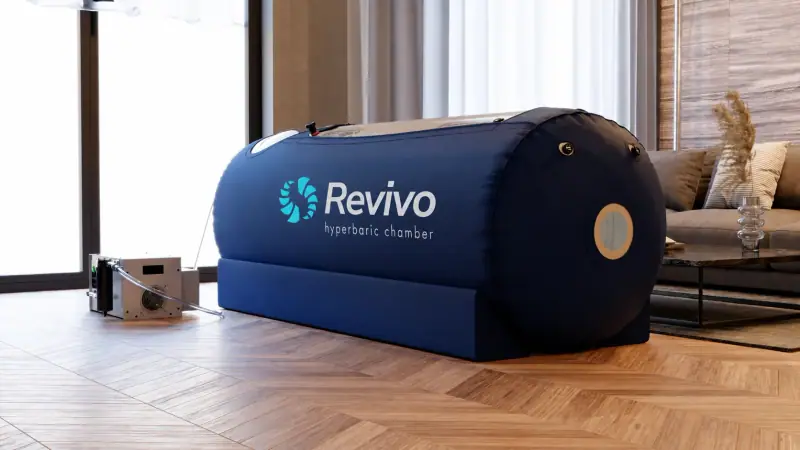
"Having HBOT available at such an affordable price is a gift to everyone who needs it, especially people with brain injuries who require extended treatments."
Shekhar Dewan · Hyperbaric oxygen therapy
Intensive Suit Therapy for movement problems
If your injury affected walking, balance, coordination or muscle tone, Intensive Suit Therapy gives you a focused way to work on them. The suit, a soft dynamic proprioceptive orthosis with elastic bungee cords linking a vest, shorts, knee pads, shoe attachments and a cap, supports the trunk and limbs in better alignment and feeds the brain steady information about body position. Paired with targeted strengthening in the Universal Exercise Unit and suspended balance work, it allows many quality repetitions safely. Revivo's combined Suit + HBOT package brings both together. For a concussion without movement problems, suit therapy usually isn't the right tool, and we'll say so.
When concussion symptoms won't settle
If headaches, fogginess, dizziness or fatigue are still with you weeks or months after a concussion, start with your family physician. Persistent symptoms often have several drivers at once, including the neck, the balance system, vision, sleep and mood, which a medical assessment can help untangle. Today's guidance generally favours a gradual, symptom-guided return to activity rather than prolonged rest. Once you've been assessed, HBOT can be discussed as a complementary option, alongside supporting therapies such as physiotherapy, neurofeedback, massage, acupuncture or speech-language pathology, with your doctor kept in the loop.
Realistic goals we commonly work toward
We set goals together at your assessment and review them as you go. Depending on your injury, they often include:
Steadier balance and walking
Fewer stumbles, more confidence on stairs and uneven ground, and better control on the weaker side.
Energy you can plan around
Building tolerance for activity so a single errand doesn't wipe out the rest of the day.
Better rest
Sleep is often among the first things people notice shifting during an HBOT course.
Everyday independence
Getting back to routines such as dressing, cooking, shorter outings and, when your team agrees, work or school.
"Thanks to them I was able to recover quickly from trauma from a brain injury and life is back to normal."
Andy Phan, HBOT client · August 2023
Every brain injury is different, and one person's experience doesn't predict another's.
After a brain injury, overdoing it often shows up the next day as headaches or exhaustion. We would rather build gradually and keep you consistent than chase a big week and lose the following one.
Safety and suitability
Before starting, we review your injury, any hospital or discharge notes, your medications and any seizure history. We recommend involving your family physician or specialist, and we may need their clearance. Seizures matter here: they can follow a brain injury, and HBOT carries a rare risk of seizure, which is reduced with lower pressures and shorter sessions. Other HBOT effects include ear discomfort as pressure changes, usually eased by swallowing or yawning, and temporary near-sightedness over a longer course. Certain lung conditions, recent ear or sinus surgery and some medications need medical review first. If you rent a chamber, follow the setup and session guidance closely, and it's sensible to have another adult at home during sessions. Either way, HBOT stays complementary, as brain injury isn't a Health Canada-recognized use.
If the injury is recent, or symptoms are getting worse, such as a worsening headache, repeated vomiting, a seizure, increasing confusion or drowsiness, slurred speech, new weakness or clear fluid from the nose or ears, go to the nearest emergency department or call 9-1-1. Rehabilitation comes later.
Frequently asked questions
Is HBOT approved for brain injury in Canada?
No. Brain injury and concussion are not among the 13 conditions Health Canada recognizes for HBOT. Revivo offers it as a complementary therapy, and we encourage you to discuss it with your doctor.
How long until we see change?
With HBOT, some people notice changes, often in sleep, after about 10 sessions, while more evident results are typically discussed after 40–60 sessions. With suit therapy, small changes in balance or confidence sometimes appear during a 3–4 week block. Progress varies widely, and nothing is guaranteed.
What does it cost?
Consultations by phone or in person are free. HBOT starts from $79 per session; ask us about rental terms for a home chamber. If suit therapy is recommended, the intake assessment is about an hour and costs $100 CAD, and therapy is billed at $122 CAD per hour. Because therapy is delivered by registered therapists, a significant portion may be claimable under extended health or private insurance. If your injury came from a collision or workplace accident, ask your claims representative what your coverage includes.
Can I do HBOT at home instead of coming in?
Yes. Hyperbaric chamber rental brings a chamber to your home in the GTA, which can make a long course easier to keep up. Medical screening still comes first.
My concussion was a year ago. Is it worth trying?
It may be. Start with your physician to rule out other causes, then talk to us about whether HBOT and supporting therapies make sense for your symptoms.
Medical note: this page is general information, not medical advice. Every person is different and progress varies. Please involve your family physician or specialist when planning therapy. Hyperbaric oxygen is offered at Revivo as a complementary therapy; neurological conditions are not among the 13 HBOT indications currently recognized by Health Canada.