
You may be watching your child find stairs a little harder each year, or noticing changes in your own strength that are hard to put into words. Muscular dystrophy is progressive, and we won't pretend otherwise. What careful, well-paced therapy may do is help protect range of motion, posture, comfort and everyday function for as long as possible. That is the work we do with children, adults and families in Toronto and across the GTA, always alongside the neuromuscular team that oversees your care.
What muscular dystrophy is
Muscular dystrophy is a group of genetic conditions in which muscle fibres are missing, or have faulty versions of, proteins they need to stay healthy. In Duchenne and Becker muscular dystrophy, that protein is dystrophin. Without it working properly, muscle fibres are damaged more easily and, over time, are gradually replaced by fat and scar tissue. The result is weakness that slowly progresses, at a pace that differs from one type, and one person, to the next.
The most common types include:
- Duchenne, which mainly affects boys, with signs usually appearing between ages two and five.
- Becker, which is similar to Duchenne but generally milder, starting later and progressing more slowly.
- Myotonic dystrophy, the most common form starting in adulthood, which makes it hard to relax muscles after use and can also affect the heart, eyes and breathing.
- Facioscapulohumeral (FSHD), affecting the face, shoulder blades and upper arms first.
- Limb-girdle, which weakens the muscles around the hips and shoulders.
- Congenital and rarer forms, including types that are present from birth or that mainly affect the eyelids and swallowing.
In many forms, the muscles of the heart and breathing are involved as well, which is why regular monitoring by a specialist team matters so much.
Signs and symptoms
Early signs can be subtle and are often first noticed by a parent, teacher or coach. Common ones include:
- Frequent falls, tripping, or trouble keeping up with friends
- Pushing on the thighs with the hands to stand up from the floor
- Difficulty running, jumping or climbing stairs
- A waddling walk or walking on the toes
- Enlarged-looking calf muscles
- Tightening at the ankles, knees, hips or elbows (contractures)
- A curving spine, especially once walking becomes harder
- Fatigue, and breathing difficulty that may first show up as poor sleep or morning headaches
Some types bring more specific signs, such as shoulder blades that stick out when the arms are raised (FSHD), difficulty letting go after a firm grip (myotonic dystrophy), or drooping eyelids and swallowing problems.
Why exercise needs extra care
This is the most important thing to understand before choosing any therapy program. Muscle affected by dystrophy is more easily injured than healthy muscle. Heavy resistance training, exercising to exhaustion and eccentric work, where a muscle lengthens under load, such as lowering a heavy weight slowly or repeatedly stepping down stairs, can damage fragile fibres.
Doing too little carries its own risks, though. Inactivity can speed up stiffness, contractures and loss of fitness. The aim is a middle path: regular, gentle, submaximal activity with plenty of rest, stopping well before fatigue sets in. Your neuromuscular team can tell you what level of activity is safe for your type and stage.
Muscle pain or soreness that lasts into the next day, unusual weakness, or cramping are signals to scale back. Dark, tea- or cola-coloured urine after exercise can mean muscle breakdown and needs same-day medical attention.
How Revivo adapts suit therapy for muscular dystrophy
Our core program is Intensive Suit Therapy, but for muscular dystrophy we deliberately take the intensity out of it. The suit itself, a soft dynamic proprioceptive orthosis made up of a vest, shorts, knee pads, shoe attachments and a cap linked by elastic bungee cords, is used mainly for support and alignment. It can help hold the trunk, hips and knees in a better position for sitting, standing and moving, and gives the body steady feedback about where it is.
What changes compared with the standard protocol:
- Lower loads, no heavy or eccentric resistance. Work in the Universal Exercise Unit uses light assistance or gentle resistance, with movements chosen to avoid loaded lengthening.
- Shorter sets, longer rests. Effort stays comfortably submaximal, and sessions can be shortened from the usual 3–4 hours.
- Range and posture first. Gentle stretching, positioning and supported standing take priority over building strength.
- Fatigue checks. How you feel during the session and the next morning guides the following day's plan.
We coordinate with your neuromuscular clinic, and their guidance on medications, splints, heart and breathing monitoring, and activity limits comes first. Massage can help with comfort, and speech-language pathology may help where speech or swallowing are affected, as supporting therapies.
It's just as important to say what this program is not. Suit therapy does not halt or reverse muscular dystrophy, and it doesn't replace medical treatments your specialists recommend.
Families sometimes ask about Hyperbaric Oxygen Therapy (HBOT). Health Canada recognizes 13 conditions for HBOT, including decompression sickness, carbon monoxide poisoning and diabetic foot ulcers; muscular dystrophy is not one of them, and HBOT is not a treatment for the condition itself. If it's considered at all, it would be as a complementary therapy, and only with clearance from your neuromuscular team given the heart and breathing involvement in many types.
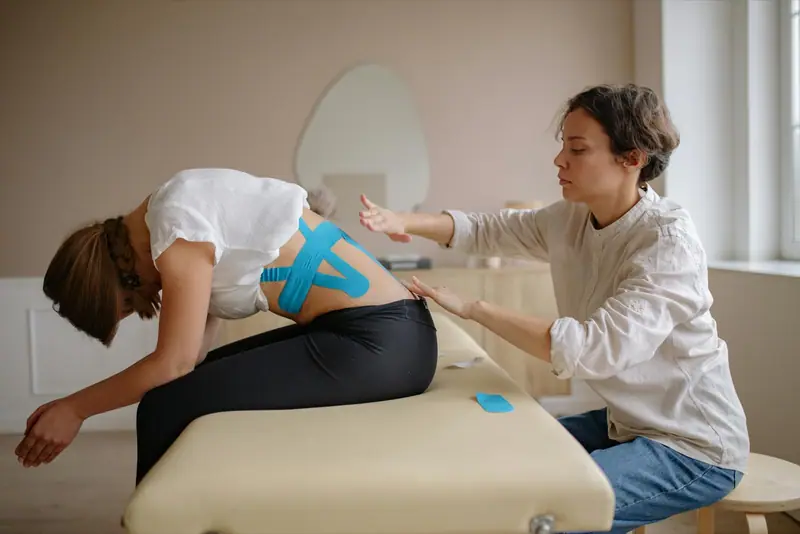
What a program looks like and goals we work toward
Every program starts with an assessment of about an hour, where we look at range of motion, posture, how you move, and how quickly you tire. Your schedule is then built around that, and may be shorter and lighter than our standard block. Goals families commonly work toward include:
Range of motion
Gentle stretching and positioning for the ankles, knees, hips and elbows to help limit stiffness.
Posture and alignment
Supported sitting and standing that encourage a more upright, balanced trunk.
Comfort
Warmth, massage and positioning to ease aches and the effort of holding the body up.
Everyday function
Safer transfers, sit-to-stand and, while it remains safe and comfortable, supported walking.
In a progressive condition, success often looks different. Keeping a joint from tightening further, staying comfortable in a wheelchair, or managing a transfer with a little less help can matter enormously to daily life, and those are goals worth working toward.
Safety and suitability
We recommend that every family involve their neuromuscular specialist or family physician before starting, and we may ask for their clearance. Before any program, we need to know about:
- Heart involvement. Many forms affect the heart muscle or rhythm, so recent cardiac findings matter.
- Breathing. Any breathing support, night-time ventilation or recent chest infections.
- Bones. Long-term steroid use and reduced walking can thin the bones, raising fracture risk during standing and transfers.
- Spine and joints. Scoliosis, contractures, splints and any surgery or planned surgery.
- HBOT questions. Muscular dystrophy is not a Health Canada-recognized HBOT condition, so we'd only discuss it as complementary, and only with specialist clearance.
Progress varies a great deal between types and individuals, and the plan will change as needs change.
Frequently asked questions
Can suit therapy slow down or stop muscular dystrophy?
No. It does not change the underlying condition. The aim is to support range of motion, posture, comfort and day-to-day function, in coordination with your medical team.
Isn't intensive exercise harmful for muscular dystrophy?
Heavy, eccentric or exhausting exercise can be, which is why we adapt the program with light loads, frequent rests and fatigue checks, and agree limits with your neuromuscular team first.
What does it cost?
Consultations, by phone or in person, are free. The intake assessment takes about an hour and costs $100 CAD, and suit therapy is billed at $122 CAD per hour, so an adapted, shorter schedule also means fewer billable hours. Because therapy is delivered by registered therapists, a significant portion may be claimable through extended health or private insurance.
How long until we see change?
Changes are usually modest and gradual, such as easier positioning, better comfort or a joint that moves a little more freely. Some families notice these during a block; others see the benefit as steadier function over time. Results vary, and none are guaranteed.
Do you work with adults as well as children?
Yes. Adults with types such as myotonic dystrophy, FSHD or limb-girdle muscular dystrophy can follow the same adapted approach, with goals set around work, home and independence.
Medical note: this page is general information, not medical advice. Every person is different and progress varies. Please involve your family physician or specialist when planning therapy. Hyperbaric oxygen is offered at Revivo as a complementary therapy; neurological conditions are not among the 13 HBOT indications currently recognized by Health Canada.